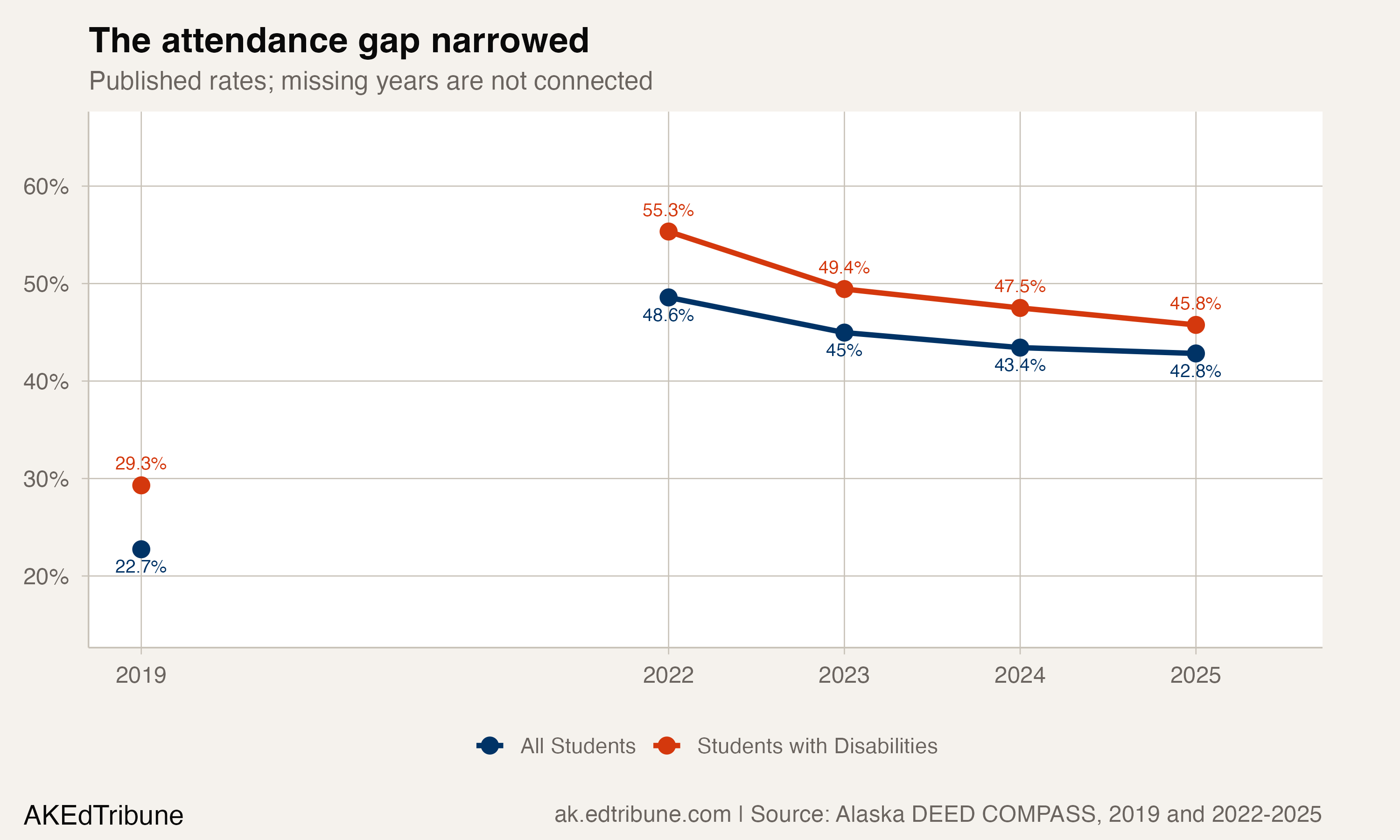
Alaska's students with disabilities had a larger decline in chronic absenteeism than the statewide student population from 2021-22 to 2024-25. Their rate fell from 55.3% to 45.8%, a 9.6 percentage-point decline, compared with a 5.8-point statewide decline. These are historical published results, not a count of attendance in the current school year.
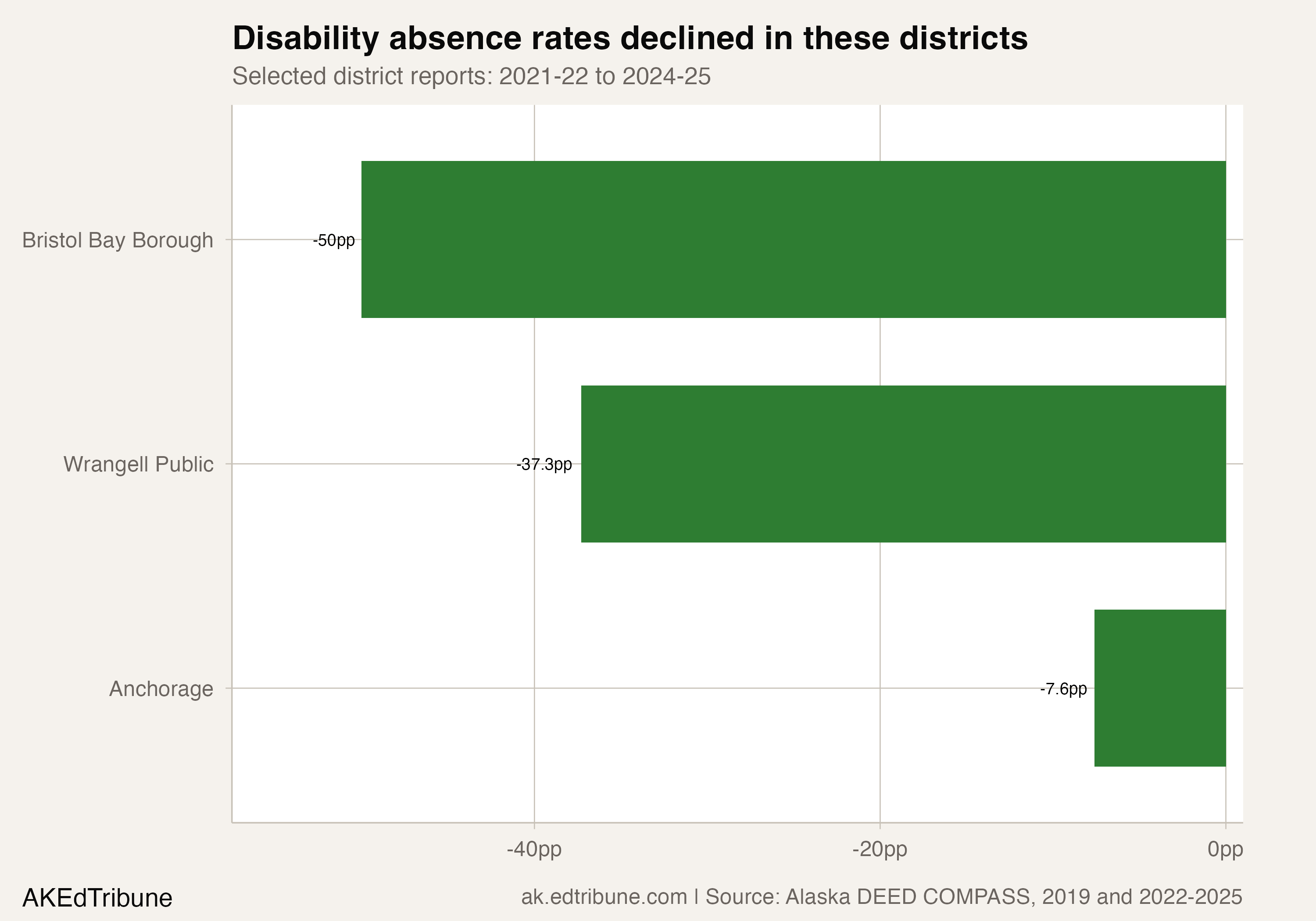
In Anchorage↗ET, the published rate for students receiving special education services fell from 52.3% to 44.7% over the same period. Bristol Bay Borough↗ET and Wrangell↗ET also reported lower rates at the later endpoint. The state-level improvement reaches identifiable districts, though the statewide average does not describe every district's path.
A smaller gap, with substantial distance still to cover
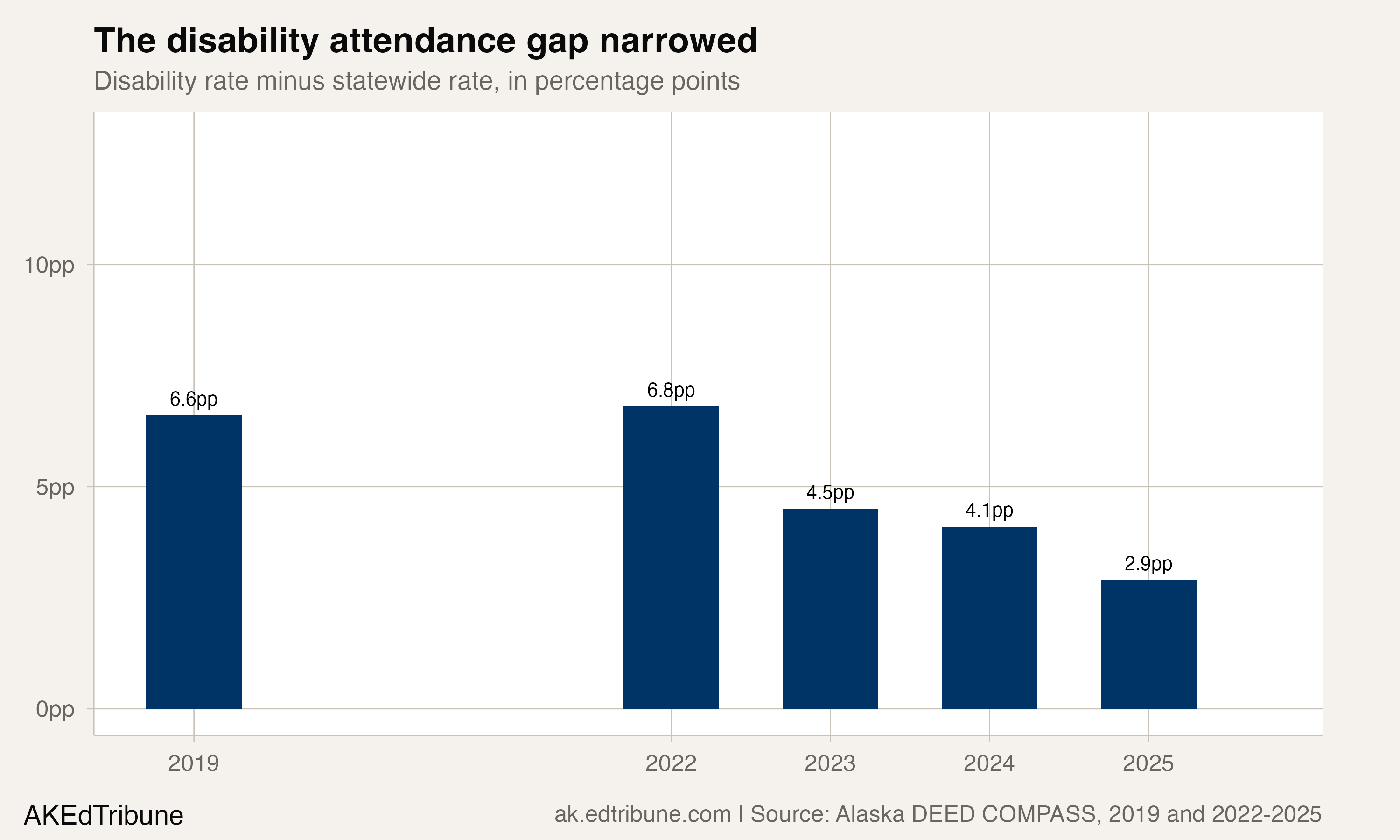
Before the pandemic, in 2018-19, the rate for students with disabilities was 29.3%, compared with 22.7% statewide. The gap was 6.6 points. In 2024-25, the corresponding rates were 45.8% and 42.8%, leaving a 2.9-point gap, less than half the earlier difference.
The disability rate declined in each adjacent annual transition after 2021-22: to 49.4% in 2022-23, 47.5% in 2023-24 and 45.8% in 2024-25. That is three consecutive annual declines. It remains 16.5 points above the 2018-19 baseline, so improvement from the pandemic-era high does not mean a return to earlier attendance levels.
Other groups followed different paths
English learners' chronic absence rate was 48.7% in 2021-22 and 50.9% in 2024-25. But the later rate was below the 51.5% reported in 2023-24. Their path includes a recent decline, even though the endpoint remains above the earlier comparison year.
For Native American students, the rate was 56.5% in 2021-22, rose to 59.8% in 2022-23 and then declined to 56.6% in 2024-25. Similar endpoints conceal an intervening rise and decline.
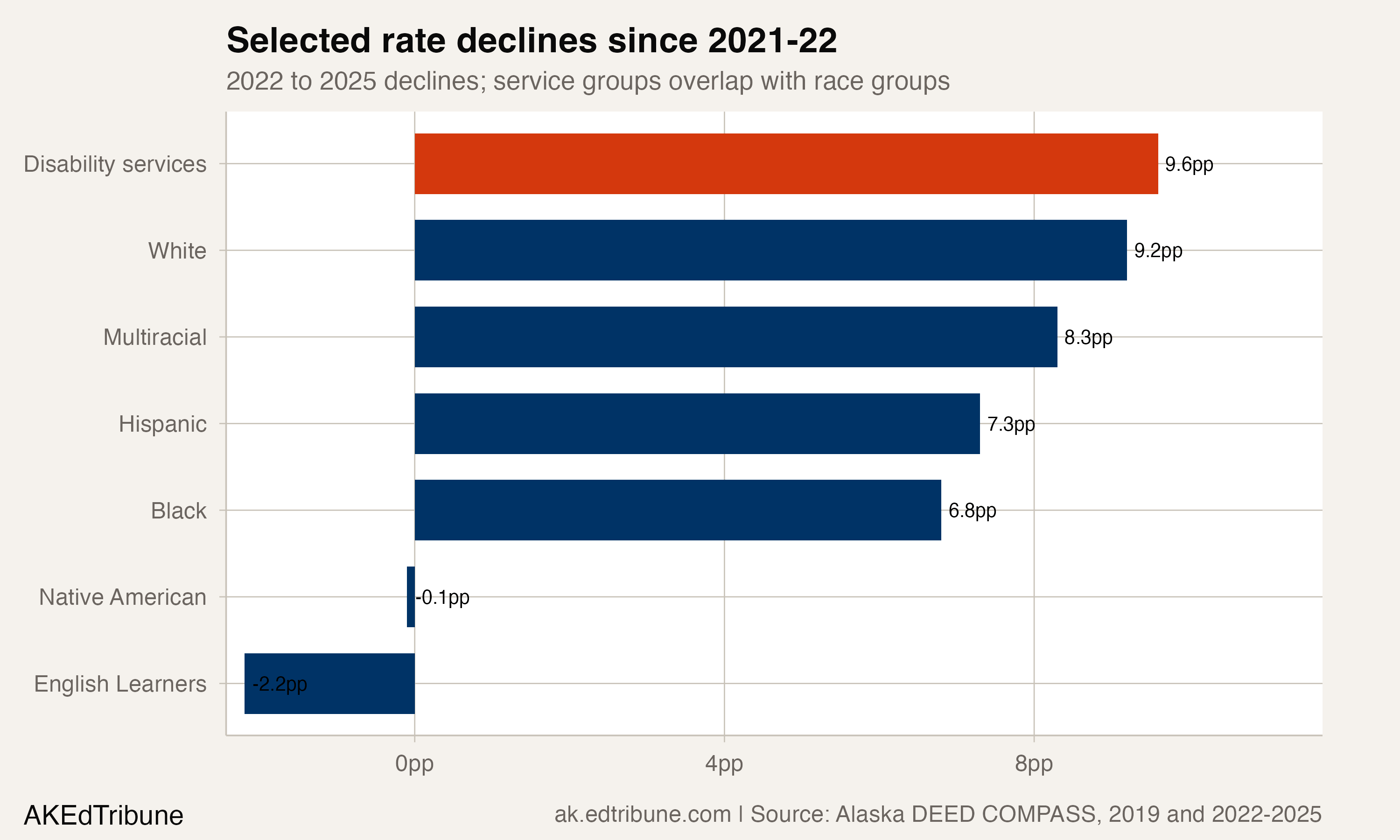
Race categories and service categories describe overlapping student populations. A comparison of their rate changes is not a division of the student body into separate parts, and it does not establish which services produced the improvement.
District variation matters
Bristol Bay Borough reported a disability chronic absence rate of 75.0% in 2021-22 and 25.0% in 2024-25. Wrangell's corresponding rates were 65.8% and 28.6%. Anchorage's decline occurred alongside these district improvements, but the reports describe changing student populations rather than the same students followed over time.
Alaska's attendance resources describe prevention, personalized outreach and intensive intervention. The attendance files do not identify which programs individual students received or measure the effect of a particular intervention. They cannot tell whether case management, changes in student composition or other factors explain the narrowing gap.
The practical question is which local approaches helped students attend more consistently, and whether those approaches can be sustained. The published record establishes improvement for students with disabilities through 2024-25. District reporting and source responses are needed to explain how it happened.
Detailed code that reproduces the analysis and figures in this article is available exclusively to EdTribune subscribers.
Discussion
Sign in to join the discussion.
Loading comments...