Alaska Never Actually Recovered
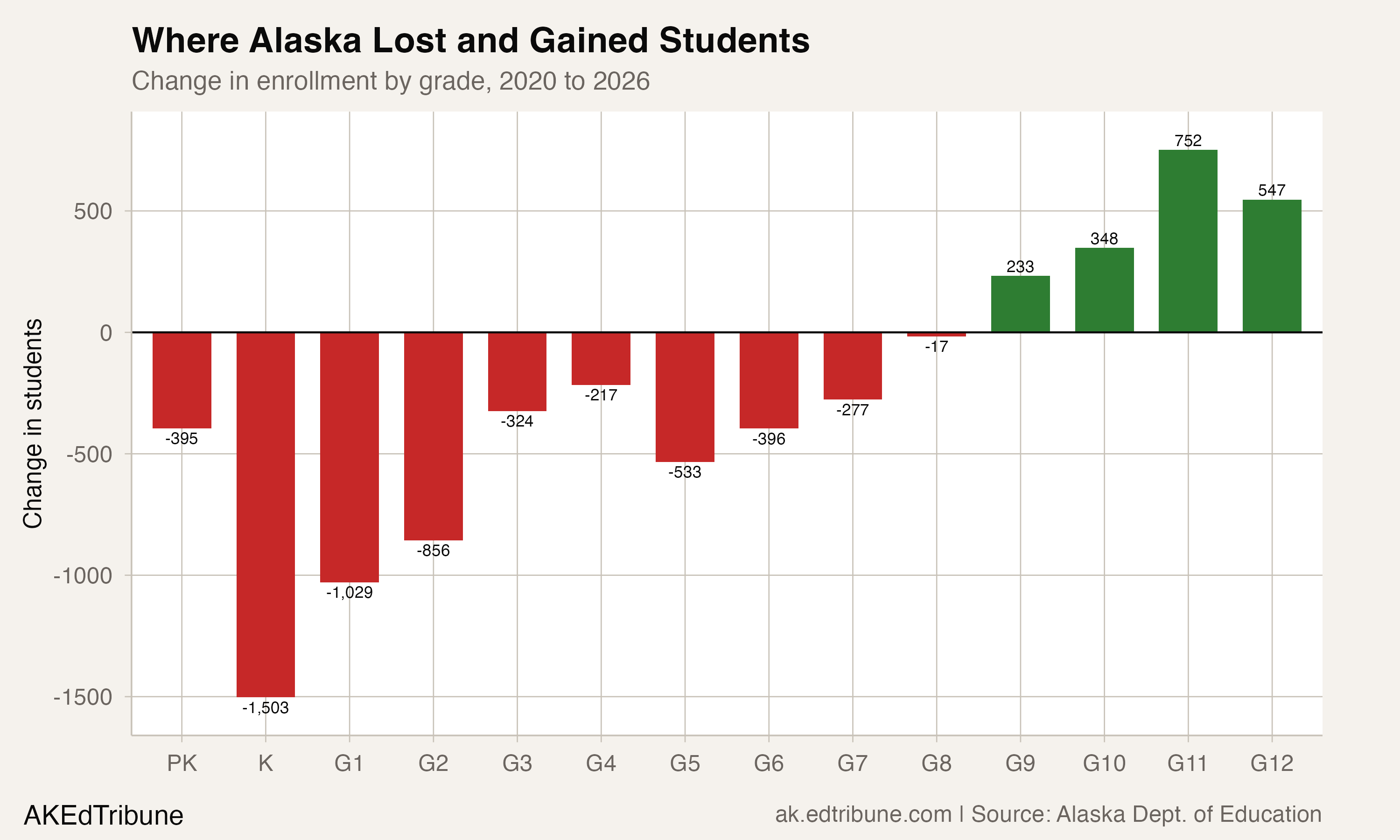
Alaska's post-COVID enrollment gains were an illusion. The state is now 3,272 students below pre-pandemic levels, and correspondence growth masked deeper traditional losses.
Data-Driven Education Journalism for the Last Frontier
Alaska's post-COVID enrollment gains were an illusion. The state is now 3,272 students below pre-pandemic levels, and correspondence growth masked deeper traditional losses.
Three correspondence districts added 5,880 students since 2020 while traditional districts lost thousands. Mat-Su Borough is the sole traditional exception.
Black enrollment fell from 3,317 to 2,669 since 2020, the steepest decline of any racial group and nearly eight times the statewide rate.
Fairbanks lost 2,017 students in seven years, closed three schools, and still faces a structural deficit. The decline is accelerating.
Twenty-nine of Alaska's districts are at their smallest enrollment ever recorded, including both Anchorage and Fairbanks. Together they hold 60% of the state's students.
Three rural districts host correspondence programs enrolling 14,379 students statewide. As traditional schools close, this parallel system keeps growing.
Alaska Native enrollment fell from 29,042 to 26,356 since 2020, a 9.2% decline that accounts for 82% of the state's total enrollment loss.
Anchorage shed 4,530 students in seven years, exceeding the entire state's enrollment decline. Three schools will close and 300 teaching positions will be cut.
Alaska public school enrollment fell to 125,317 in 2025-26, a new low in the dataset, as 29 of 53 districts hit record-low enrollment and outmigration enters its 13th year.
DEED releases 2025-26 enrollment data showing Alaska at a seven-year low of 125,317 students.