Special Ed Students Graduate at 61%, the Lowest Rate of Any Group in Alaska
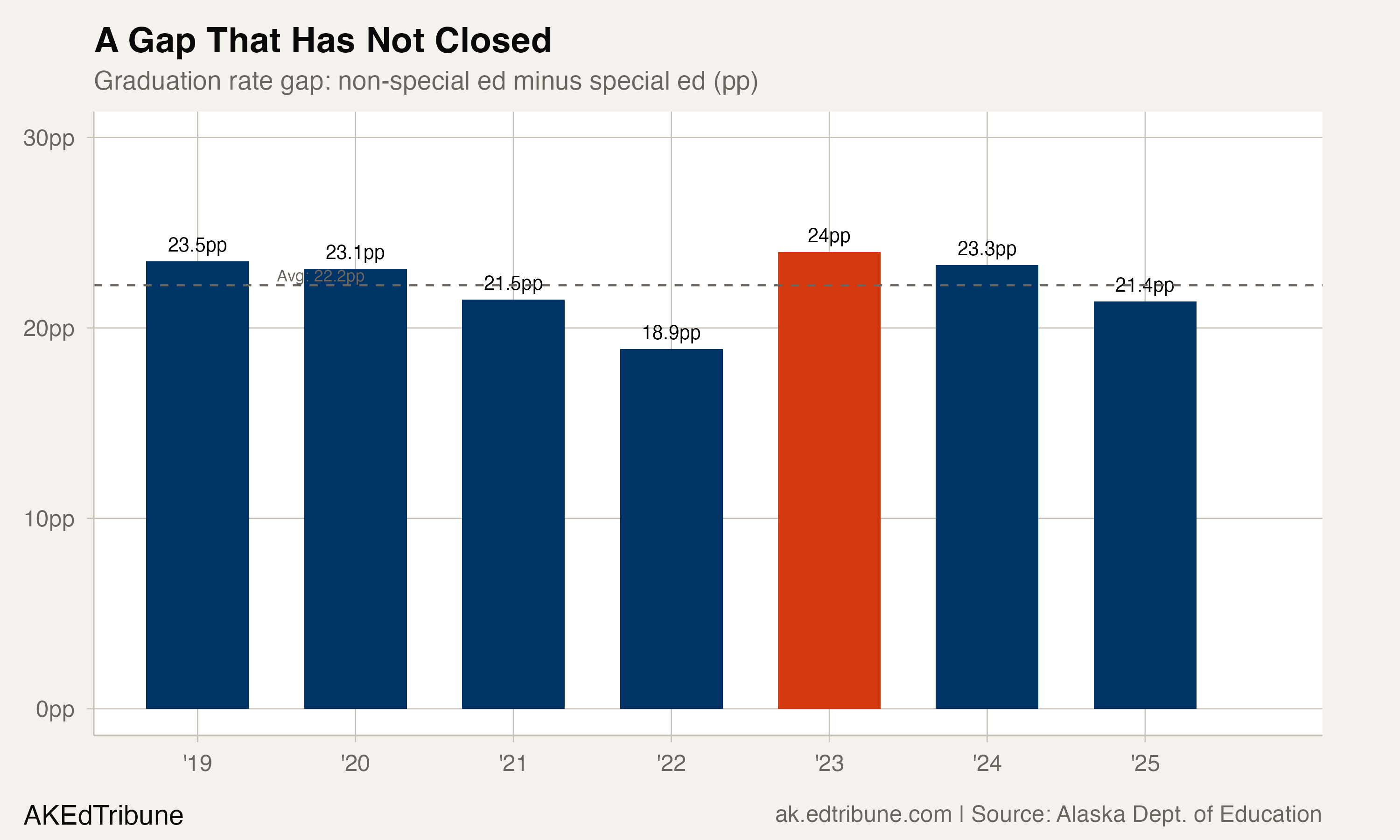
Alaska's special education graduation rate has barely moved in seven years while 471 students in the 2025 cohort left high school without a diploma.
Data-Driven Education Journalism for the Last Frontier
Education News & Data
Local education reporting from every corner of Alaska, grounded in Alaska Department of Education data.
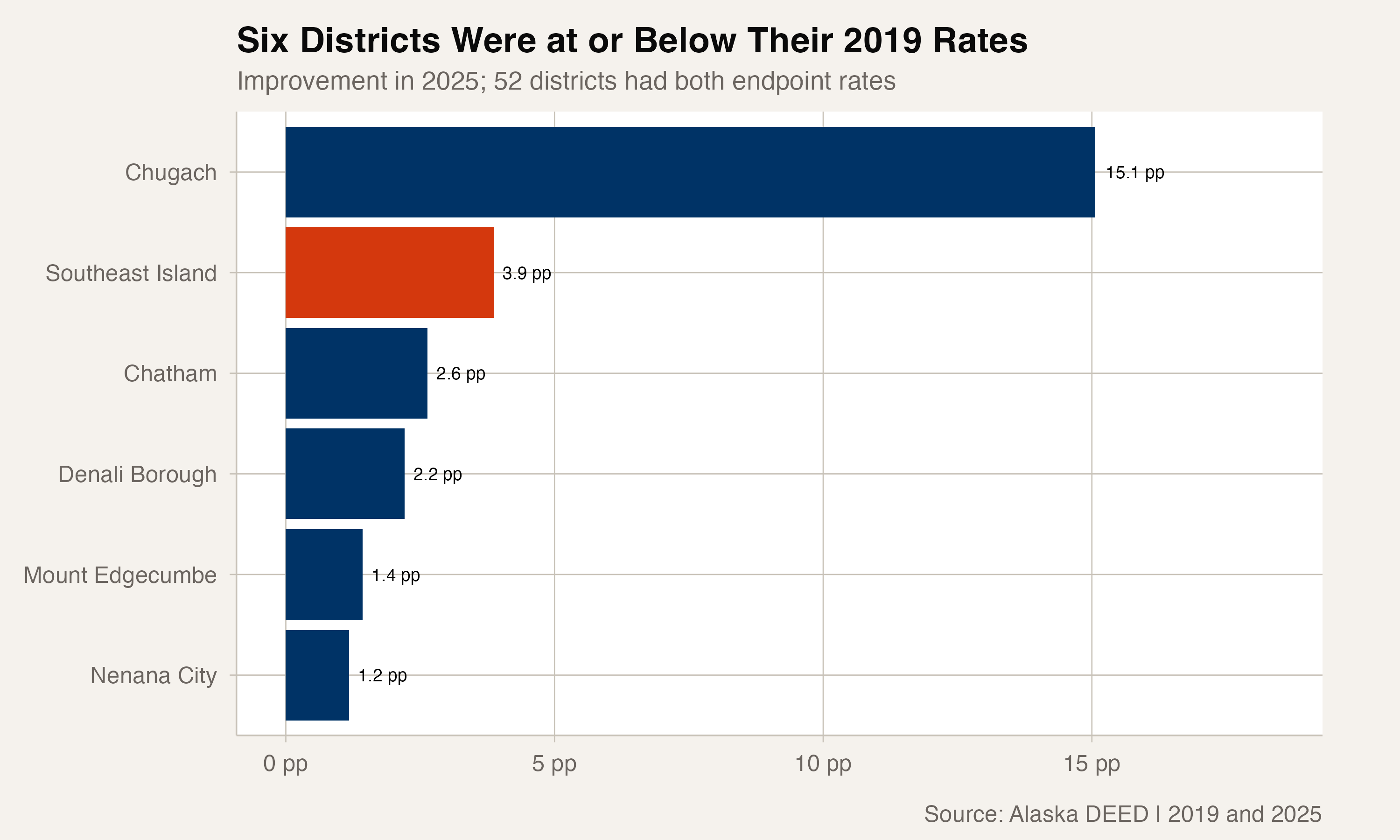
Southeast Island's chronic absenteeism rate fell to 22.8%, 3.9 points below 2019, the second-widest recovery margin among six Alaska districts.
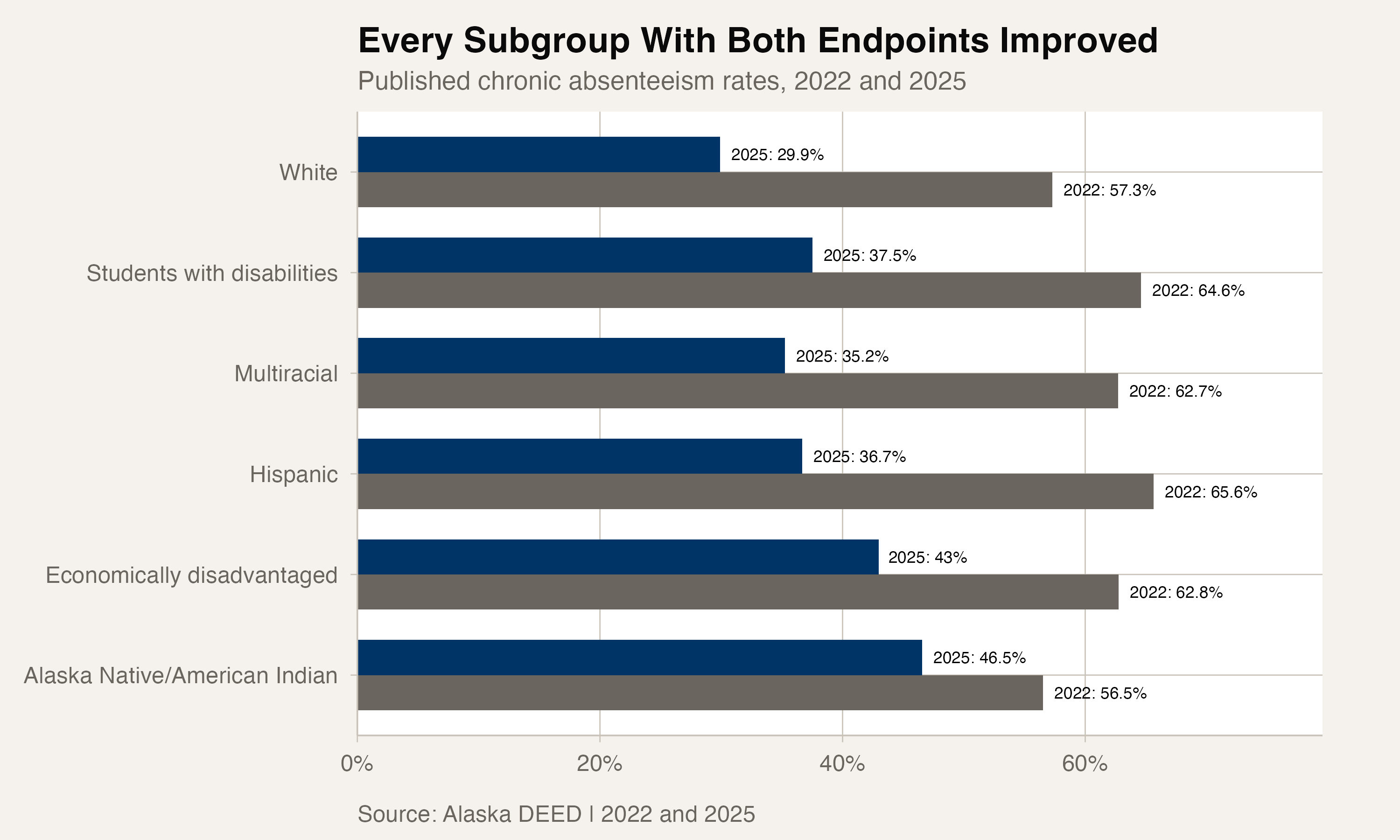
Valdez City School District cut chronic absenteeism by 25.6 percentage points from 2022 to 2025, the third-largest decline among 49 Alaska districts with positive rates reported at both endpoints.
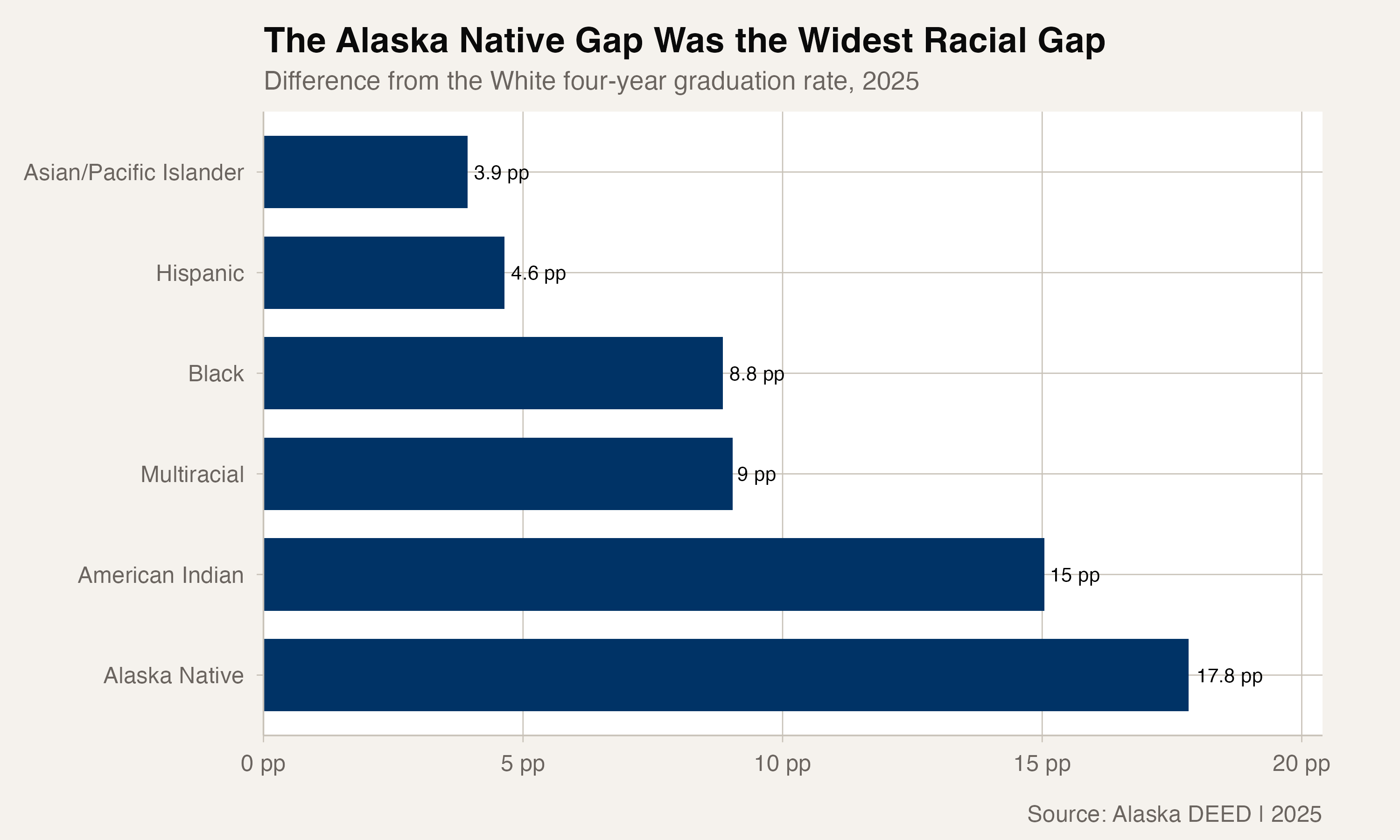
White students posted an 85.8% four-year graduation rate in 2025, compared with 68.0% for Alaska Native students, the widest gap among six other reported race groups.
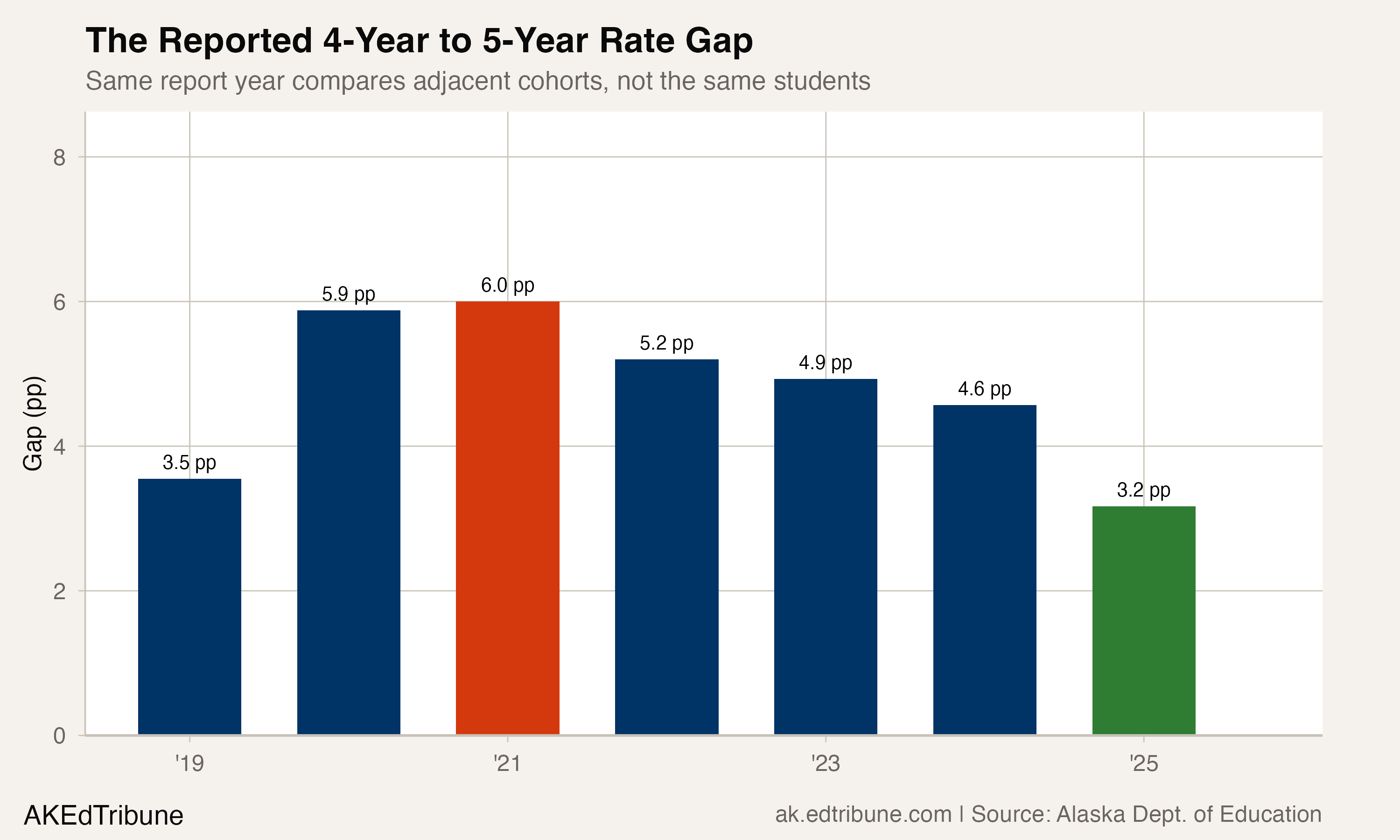
Alaska's same-report-year four-to-five-year gap reached 6.0 points in 2021, but those rates describe adjacent cohorts. Matched files show 2,649 net additional graduates over six years.
Alaska's special education graduation rate has barely moved in seven years while 471 students in the 2025 cohort left high school without a diploma.
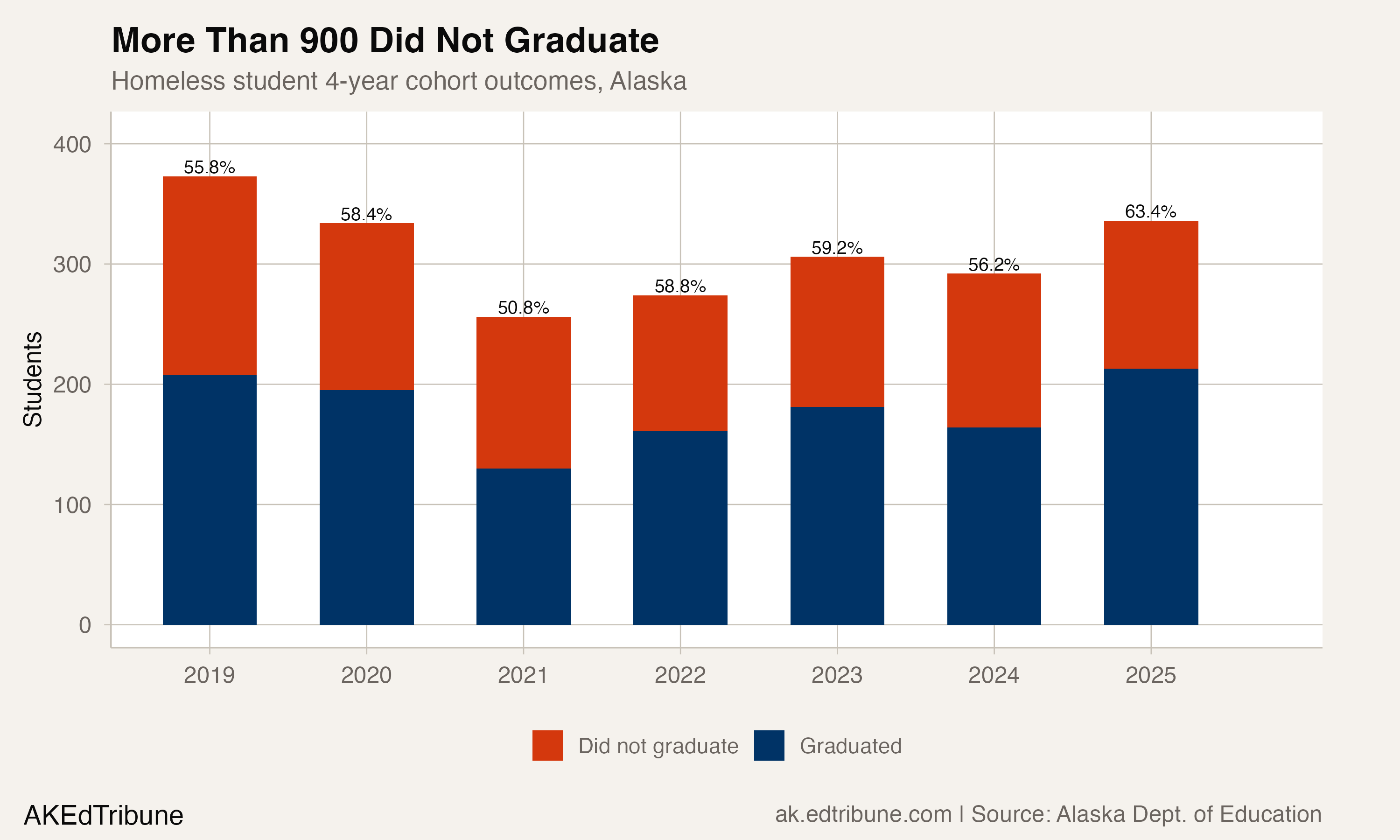
In seven years of data, students who are currently homeless' graduation rate has never exceeded 65%. The 2025 rate of 63.4% is the best on record, and still 16.5 points below the state average.
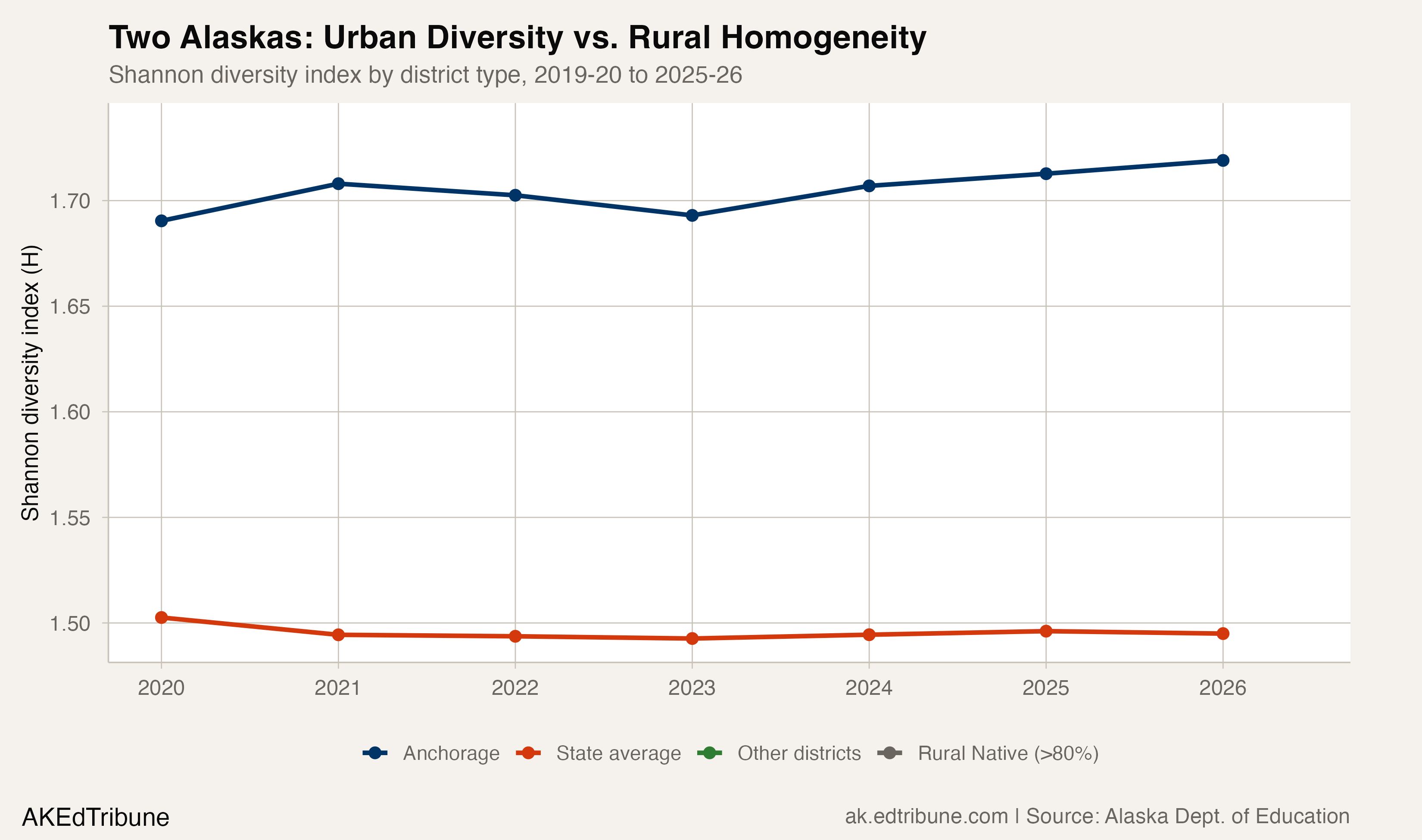
Two-thirds of Alaska's 53 districts are majority-minority, but the state's racial composition has barely shifted in seven years of data.
Alaska Native students' four-year graduation rate rebounded from its 2022 low, but remained below the statewide rate in 2025.
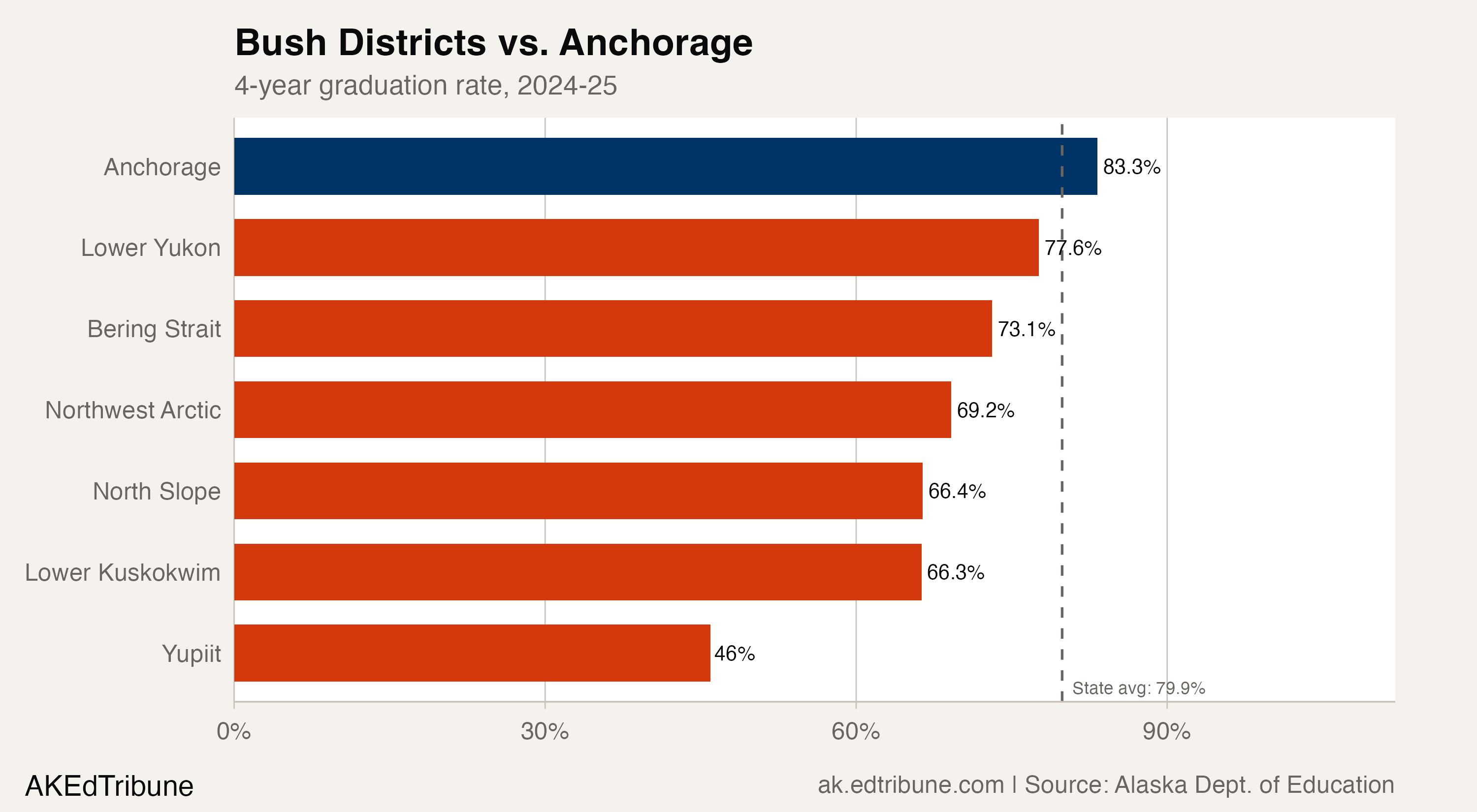
Fifteen Alaska school districts graduated fewer than 70% of their students in 2025. Nearly all are remote Bush communities where teacher turnover, tiny cohorts, and extreme geography collide.
Alaska's 4-year graduation rate has stayed below 80% for six of seven years, trailing the national average by 7 points. Nearly 2,000 students per year leave without a diploma.
Yukon-Koyukuk School District slashed chronic absenteeism from 52% to 17% in three years, the largest improvement in Alaska, with four schools reporting zero chronically absent students.
Alaska's kindergarten enrollment has fallen 15% since 2020 while 12th grade hit an all-time high, creating a pipeline inversion that will accelerate decline for years.
Alaska's 12th grade class consistently outnumbers the prior year's 11th graders, driven by correspondence school re-entry and credit recovery.
From Pelican's 16 students to the Pribilof Islands' 56, Alaska's smallest districts face existential questions about whether they can keep their doors open.
Alaska's post-COVID enrollment gains were an illusion. The state is now 3,272 students below pre-pandemic levels, and correspondence growth masked deeper traditional losses.